Tag: Specialty Coffee

  • The Third Wave Movement: Where It Started, Where It Is Now, Where It Is Going

    The Third Wave Movement: Where It Started, Where It Is Now, Where It Is Going

    The phrase third wave coffee gets thrown around so loosely that it has nearly lost its meaning. To some, it’s a marketing term for any coffee shop with a minimalist logo and white tile. To others, it’s a specific historical movement with founders, manifestos, and consequences. The truth is closer to the second one, and the story is worth knowing if you care about the coffee in your cup today.

    What the waves actually refer to

    The wave metaphor was popularized by Trish Rothgeb in 2002, when she wrote an article in The Roasters Guild’s newsletter that named the movement she was watching unfold. The waves work like this:

    First wave was the post-war commodity boom: Folgers, Maxwell House, instant coffee, the rise of coffee as a household staple in nearly every American home. Coffee was a beverage, not a craft. Quality varied wildly and few drinkers noticed.

    Second wave began in the 1960s and 70s with Peet’s in Berkeley and ran through the explosive growth of Starbucks in the 1990s and 2000s. Second wave introduced espresso drinks, dark roasts, and the cafe as a third place. Origin still mattered less than blend; quality was about consistency at scale.

    Third wave emerged in the early 2000s as a small group of roasters and cafes pushed back against the homogenization of the second wave. They wanted to know which farm a coffee came from, who picked it, how it was processed, and how to roast it to express that specificity rather than mask it.

    The founding cafes and roasters

    A few names dominate the early third wave history:

    • Stumptown (Portland, 1999): Direct-trade green sourcing, light roasts, dedication to single-origin transparency.
    • Intelligentsia (Chicago, 1995): Pioneered the Direct Trade certification, formalizing relationships with specific farms.
    • Counter Culture (Durham, 1995): Heavy investment in barista training and origin education.
    • Tim Wendelboe (Oslo, 2007): Pushed light roasts, washed processing, and Nordic precision into the global conversation.
    • Coffee Collective (Copenhagen, 2007): Co-founded by World Barista Champion Klaus Thomsen, brought competition-level brewing to a retail context.
    • Square Mile (London, 2008): James Hoffmann’s roastery, which became the European reference point for what third wave coffee should taste like.

    What third wave actually changed

    The lasting impact of the third wave wasn’t a single product or technique. It was a shift in what coffee was assumed to be. A few specific changes that the movement embedded into the global coffee culture:

    Single-origin became normal. A bag listing a specific farm and washing station, rather than just a country, was exotic in 2005 and standard in 2026.

    Light roasting became respected. The second wave assumed darker was better. The third wave demonstrated that lighter roasts could express origin character that disappeared at darker roast levels.

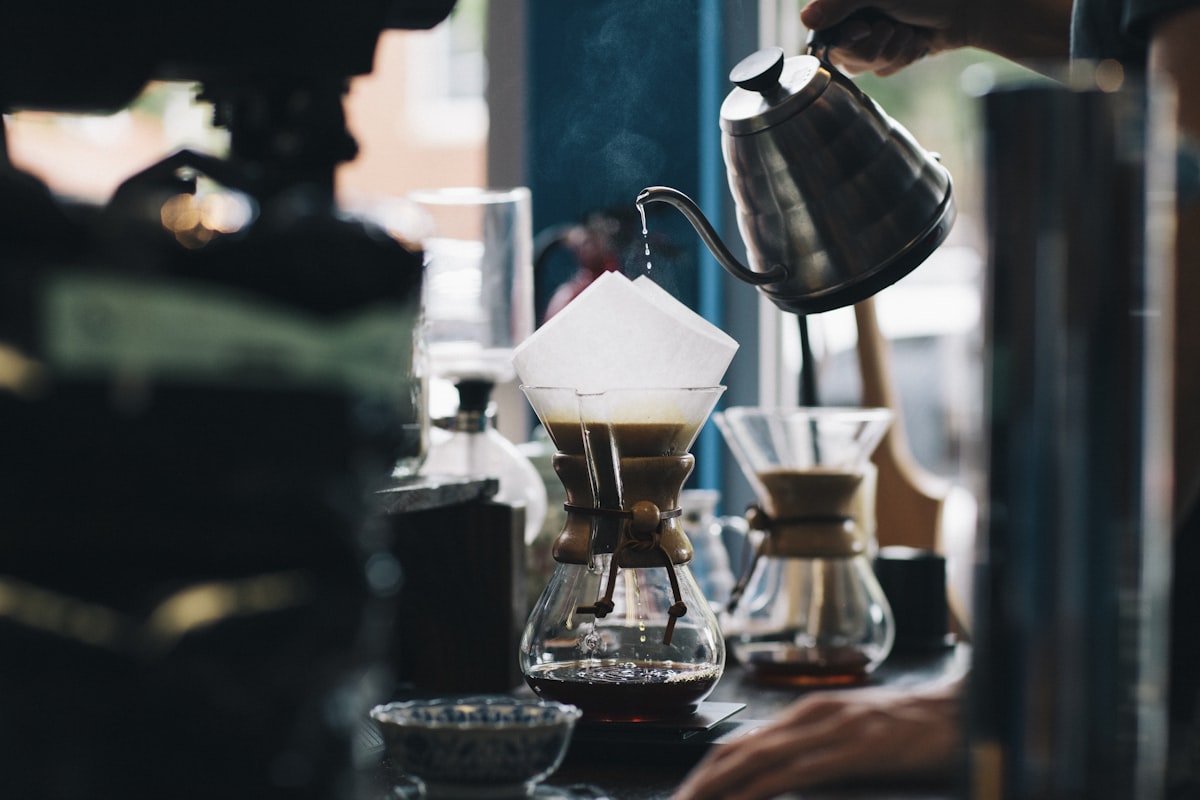
    Brewing methods diversified. Pour-over, AeroPress, Chemex, siphon, and other manual methods were marginal in cafes before 2005. They became standard offerings as the movement valued the cafe as a place to taste rather than to caffeinate.

    The barista became a craftsman. Wages rose, training programs formalized, the World Barista Championship became a serious competitive circuit, and “barista” became a respected job title in many markets.

    Direct trade and traceability became expected. Specialty buyers built direct relationships with farms, often visiting and forming long-term partnerships, in contrast to the commodity broker model that dominated previously.

    The third wave plateau

    Around 2018-2020, the movement clearly plateaued in many markets. The cafes that defined the wave reached their cultural saturation point. The minimalist white-tile aesthetic became a cliche. Younger drinkers raised on third wave norms started to find some of the dogmas (no flavored drinks, no oat milk in your espresso, no compromises on light roast) more annoying than meaningful.

    This plateau wasn’t a failure. It was the natural maturation of any movement that grows from outsider to mainstream. By 2020, third wave practices had become the new baseline, and the next conversation was about what came next.

    What’s coming after

    There’s no consensus on what to call the next wave, but several themes are emerging:

    Hospitality is back in fashion. The aloof barista era is ending. Cafes that combine third wave technical competence with warm, accessible hospitality (rather than the implicit gatekeeping of the early third wave) are growing fastest.

    Inclusive menus. The dogma against flavored drinks, alternative milks, and cold brew has softened. The best new cafes serve great espresso to the espresso obsessive and a great oat-milk vanilla latte to the person who wants one, without judgment in either direction.

    Producer-side conversations. The third wave told the story of farms in the abstract. The next conversation is more grounded: how do farmers actually capture more value, what do living wages look like across the supply chain, and how does the industry adapt to climate-driven origin shifts.

    Fermentation experimentation. Anaerobic naturals, co-fermentation, lactic processing, and other producer-side experiments are pushing flavor boundaries in ways the early third wave didn’t anticipate.

    The retail-centric model is being questioned. Subscription services, RTD coffee, and direct-from-roaster relationships are challenging the assumption that the cafe is the central institution of specialty coffee.

    What it means for you, the drinker

    You don’t have to care about the wave terminology to benefit from the third wave’s legacy. The bag of coffee on your shelf is almost certainly better, more transparently sourced, and roasted with more skill than the equivalent bag from twenty years ago. The cafe you walk into is more likely to serve a great cup, regardless of whether it markets itself as third wave or not. The brewing methods you use at home are more likely to produce something memorable.

    The third wave gave us all of that. The next wave, whatever it ends up being called, is being built on top of it.
  • Specialty Coffee Trends Worth Paying Attention to in 2026

    Specialty Coffee Trends Worth Paying Attention to in 2026

    Trend lists in coffee tend to recycle the same five ideas every January. We’re going to skip that. Here’s what is actually moving the needle in 2026, based on what cafes are doing differently, what roasters are talking about behind closed doors, and what drinkers are actually buying.

    1. Slow bars are quietly winning

    The third-wave cafe of the late 2010s was built around speed: dial in the espresso, pull, hand it off, next. Around 2024, a small but growing number of cafes started doing the opposite. They put a single barista behind a multi-method bar (espresso, pour-over, AeroPress, sometimes siphon) and accepted that they would serve fewer drinks per hour but at much higher ticket size and engagement.

    The economics work because these cafes can charge $7-9 for a pour-over without complaint, the customer is treating the visit as an experience, and the staff retention is dramatically better. Expect to see more of these in 2026, especially in second-tier cities where rent allows it.

    2. Fermentation has gotten genuinely weird

    Anaerobic fermentation, thermal shock, lactic and acetic processing, co-fermentation with fruits or yeasts: what looked like experimental exotica three years ago is now standard offering at competition-focused farms. The flavors range from incredible to genuinely confusing.

    The honest take in 2026 is that the field is still figuring out which fermentation techniques produce reliably good cups versus which ones are essentially flavor cosplay. As a drinker, your best move is to try them with low expectations and accept that some will taste like wine, some like fruit punch, some like nothing you’ve had before, and some like a mistake. That’s part of the deal.

    3. RTD is stealing iced espresso revenue

    Ready-to-drink coffee in cans is the fastest-growing segment in the entire coffee category, and most of that growth is coming out of summer cafe sales. La Colombe’s draft latte established the format; brands like Stumptown, Chameleon, and a wave of regional players have refined it. The quality has gotten good enough that office workers who used to walk to the cafe at 2 PM now grab a can from the fridge instead.

    For cafes, this is a bigger problem than they want to admit. The iced latte was historically a high-margin summer staple. Losing even 20% of that volume to canned alternatives changes the unit economics meaningfully.

    4. The latte art backlash

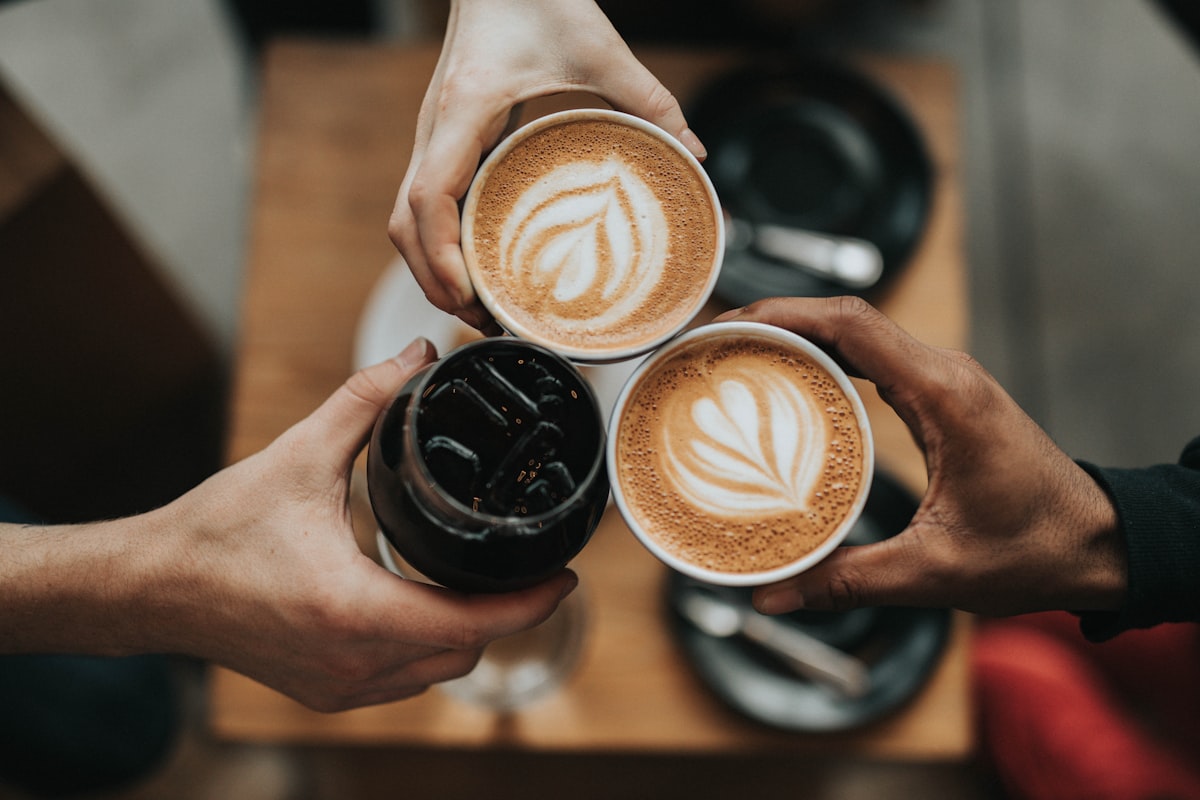
    Latte art is not going away, but a quiet rebellion is happening among baristas who believe it has become a distraction from the actual coffee. The argument: an extra 30 seconds spent pouring a perfect rosetta is 30 seconds not spent dialing in the next shot, which directly impacts the next ten drinks served. Several high-profile competition baristas have publicly stopped doing decorative pours in favor of clean centered hearts that take half the time.

    This is small but meaningful. It signals that the cafe scene is starting to value cup-out quality over visual presentation, which is a healthier place to be.

    5. Decaf is getting good

    Decaffeinated coffee was a punchline for most of the third-wave era. That’s ending. The Swiss Water and EA (ethyl acetate, sugar-cane derived) processes have improved significantly, and farms are increasingly willing to send high-quality green to be decaffeinated rather than treating it as a dumping ground for lower lots.

    Several specialty roasters now have a decaf as their highest-effort SKU, and the market is responding. Sales of premium decaf are up dramatically year over year, partly driven by health-conscious millennials and partly by older drinkers who want the ritual without the caffeine.

    6. Equipment for the prosumer is the growth segment

    The home espresso market split into two camps a few years ago. The entry tier ($300-700) is now genuinely capable, with machines from Breville, Gaggia, and the new wave of Chinese-engineered brands like Sage offering performance that would have required $1,500 in 2018. The high end ($2,000-5,000) keeps growing too, with Lelit, Profitec, and ECM seeing strong demand.

    What’s missing is the middle. Few new launches in the $800-1,500 range, partly because the entry tier has caught up so well. If you’re shopping in 2026, the sweet spot is either spending $500-700 on a well-reviewed entry machine, or saving up for a $2,000+ E61-equipped prosumer setup. The middle is harder to justify than it used to be.

    What’s not a trend, despite what you’ll read

    A few things you’ll see on every other trend list that don’t actually mean much:

    • Mushroom coffee. A real product with a small loyal audience. Not a wave.
    • NFT coffee. Quietly buried in 2024 and not coming back.
    • AI cafes. Robot baristas keep getting demos, keep failing to scale. The economics still don’t work outside of airport pilots.
    • Olive oil coffee. Starbucks tried, the audience shrugged, the menu item is being quietly retired in most markets.

    The healthier trends in 2026 are about the craft getting better, not the gimmicks getting louder. That’s a good place for the industry to be.

  • The 2026 Coffee Industry Outlook: Prices, Pressures, and Where the Market Is Heading

    The 2026 Coffee Industry Outlook: Prices, Pressures, and Where the Market Is Heading

    If you’ve bought a bag of specialty coffee in the last six months, you’ve felt it. Prices that sat comfortably around $18-22 a bag are now closer to $24-28, and the cheap end of the curve is creeping up faster than the premium end. This is not your roaster getting greedy. It’s the bottom of a long supply-side story finally hitting your shelf.

    What’s actually driving prices

    The headline number to know is the C-market arabica futures price, which crossed historic highs in late 2025 and has stayed elevated through early 2026. Three things converged. Brazil, the world’s largest producer, had its second consecutive drought-affected harvest. Vietnam, the largest robusta producer, faced both drought and rising labor costs. And the warehouses that normally smooth out year-to-year swings ran low after several seasons of demand outpacing supply.

    For roasters, this means green coffee they bought 18 months ago is now half as expensive as what they need to buy this year to replace it. For drinkers, that gap shows up in your bag price about three to six months later than it shows up on the futures chart.

    The market is splitting in two

    One of the more interesting developments in 2026 is how clearly the specialty market is bifurcating. The premium end, single-origin lots from named farms scoring 87+ on the SCA scale, is holding its margins because the people buying it are not particularly price-sensitive. They were already paying $25 for a bag; $28 doesn’t change the decision.

    The middle tier, the everyday specialty bag scoring in the 84-86 range, is where the squeeze is real. Drinkers who used to pay $18 for solid coffee are increasingly trading down to grocery-store specialty (Trader Joe’s, Costco, the upper end of supermarket private labels) which has gotten genuinely better in the last few years.

    Climate is now the main story

    For most of the 2010s, climate risk in coffee was treated as a 2030-and-beyond problem. That timeline has accelerated. The arabica growing belt is shifting upslope, and farms below 1,400 meters in Central America that produced reliable washed coffee in the 2000s are now seeing rust pressure, irregular rainfall, and lower yields. Farms above 1,800 meters are doing better, but there is only so much altitude to climb.

    Several producing countries are actively working on this. Colombia’s Cenicafe has released disease-resistant Castillo variants that are gaining real traction. Brazil is investing in irrigation in regions that historically relied entirely on rainfall. Ethiopia is pushing forward on traceability so smallholders can capture more of the premium price. None of this solves the structural problem, but it slows the bleeding.

    What roasters are doing differently

    • Longer green contracts. A roaster that used to buy 6-8 weeks of inventory at a time is now signing 6-month forward contracts to lock in price.
    • More blended SKUs. Single-origin offerings are getting scaled back in favor of blends that can absorb green-cost variance.
    • Subscription leaning. Subscription customers are stickier and let roasters smooth their cash flow. Expect more push toward subscriptions through 2026.
    • Robusta isn’t a dirty word anymore. Premium robusta from Uganda and India is showing up in espresso blends from roasters who would have laughed at the idea five years ago.

    What it means for home brewers

    If you’re brewing seriously at home, three practical takeaways:

    Buy in slightly larger quantities if your storage allows. Vacuum bags or canisters with a one-way valve hold quality for 4-6 weeks past roast date. Buying twice as much, twice as infrequently, captures small bulk discounts and reduces shipping waste.

    Be more open to blends. Single-origin coffees are wonderful, but the price premium is widening. A well-built blend at $22 may give you more cup quality than a stretched single-origin at the same price.

    Try the upper end of grocery store specialty. The gap between a good supermarket bag and a mid-tier roaster bag has narrowed. For everyday drinking, it’s worth a few experimental purchases.

    The wildcard: tariffs and trade

    One thing that could change all of this quickly is trade policy. Coffee enters the US duty-free under most-favored-nation status, and that has been remarkably stable for decades. Any change to that would hit the market hard, especially for smaller roasters with thin margins. Worth watching, even if nothing has materialized yet.

    The short version of 2026: more expensive, more interesting, more unstable. The specialty industry is mature enough to weather a difficult year, but the assumption that prices and supply just keep getting better is finally and clearly over. The roasters and drinkers who adapt fastest will be the ones who treat the new normal as the actual normal, not a temporary problem to wait out.